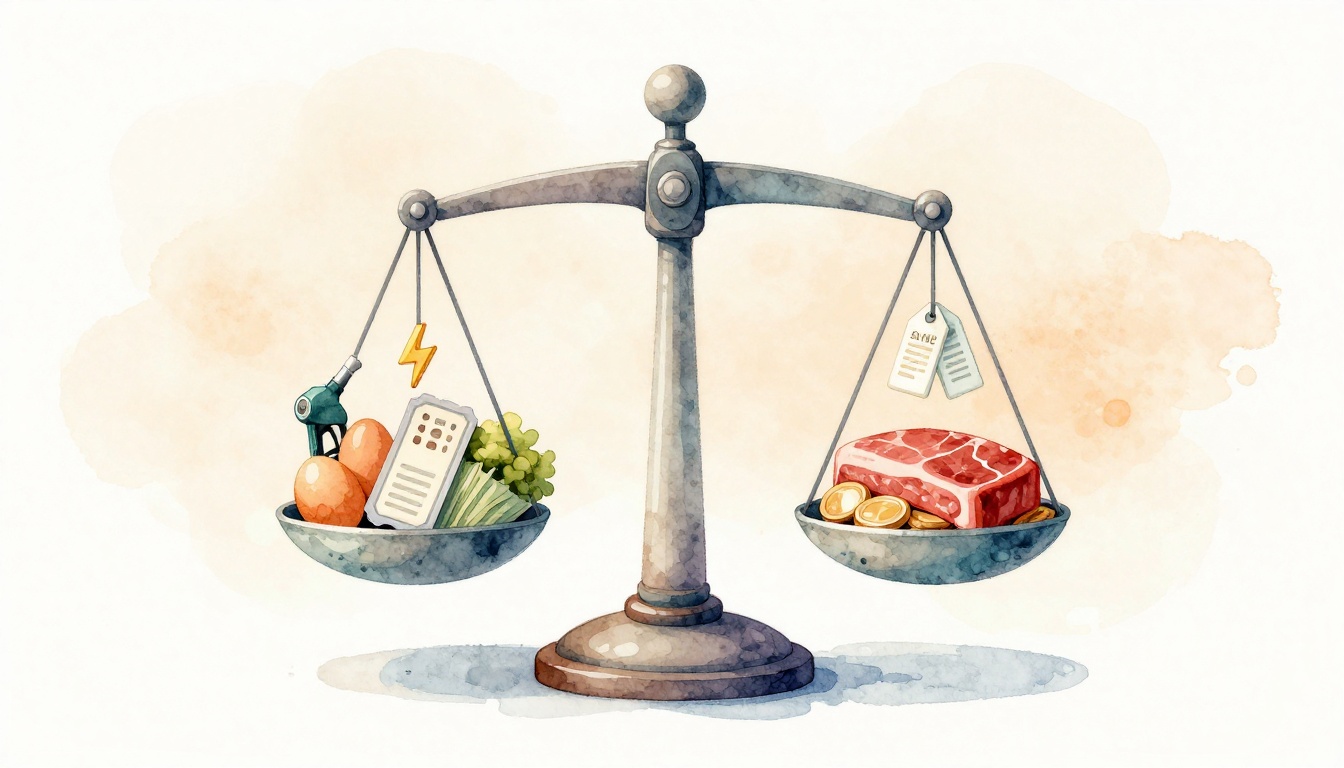
Have you ever noticed how gas prices jump during summer road trips, or how concert tickets can get crazy fast when a band sells out? That pattern is not random. It comes from one simple idea: how supply and demand affect prices.
Supply tells you how much is available. Demand tells you how badly people want it. When those two forces get out of balance, prices move.
Let’s break it down in plain English. You’ll also see real examples from 2025 and 2026, from beef and eggs to electricity and grocery aisles. By the end, you’ll be able to spot price shifts before they hit your wallet.
What Supply Really Means and Why It Sets the Stage for Prices
Supply is all about sellers and how much they’re willing to offer at different prices. Think “lemonade stand” for a minute. If there are more lemons, the stand can make more cups. So supply goes up.
Now picture the same stand again, but the lemons are scarce. Maybe a heat wave ruined the crop. In that case, selling lemonade takes more effort. The seller may charge more per cup. That’s the basic supply logic.
In most markets, supply slopes upward. When prices rise, it’s more tempting to produce and sell. When prices fall, sellers often reduce output or look for other options.
If you want a quick refresher on the classic supply and demand curves, see What are supply and demand curves?.
Several things can shift supply, meaning they change how much gets offered at any given price:
- Production costs: higher costs make it harder to supply goods cheaply
- New technology: better methods can raise supply without raising costs
- Weather and natural events: they can destroy crops or disrupt operations
- Government rules: taxes, permits, or tariffs can limit what gets made
Here’s where it gets real. In 2025, drought conditions hurt U.S. cattle feed and grazing land. That reduced the number of cows ranchers could keep. As a result, beef supply tightened, and prices climbed.
Even the numbers show the strain. Beef retail prices rose from $8.15 per pound in January to $9.55 per pound by December 2025 (about 17%). And ground beef hit $6.69 per pound in December 2025, the highest since the 1980s. Supply stayed tight because rebuilding herds takes time.

Key Things That Change Supply Levels
Supply doesn’t just change because owners feel like it. It changes because constraints change.
For example, beef supply can drop for multiple reasons at once:
- Input costs spike
Feed prices rise when drought shrinks grass and hay. - New tech can help, but not instantly
Better farming or storage can reduce losses, but it takes time to scale. - Natural events can be brutal
Drought can cut yields and force sales of cattle earlier than planned. - Number of sellers can change
More ranches, farms, or factories can increase supply. Fewer sellers do the opposite.
In the drought story, the key issue was simple: there weren’t enough cattle to meet strong demand. As a result, even if some buyers stayed the same, the market had fewer “cups of lemonade,” so prices rose.
And that’s the core supply lesson: if supply falls while demand holds steady, prices usually rise.
Demand Explained: Why Buyers Drive Prices Too
Demand is the flip side. It’s how much buyers want at different prices. If you love ice cream, a hot day boosts your desire. You’ll buy more, especially if the price feels fair.
In typical markets, demand slopes downward. When prices go up, fewer people buy. When prices go down, more people jump in. That’s why sales can move inventory quickly.
Demand also shifts. A shift means buyers want more (or less) at every price point. Demand can rise because of:
- Income changes (people can spend more)
- Tastes and trends (new favorites spread fast)
- Prices of related goods (substitutes become more or less attractive)
- Buyer numbers (more people means more total demand)
A big example from 2025 to 2026 shows up in electricity. Data centers grew quickly, especially in Texas. That matters because data centers use huge amounts of power, and grid planning takes years. When demand rises fast and supply can’t catch up right away, prices move.

So when demand surges, think “crowd at the register.” If many people want the same thing and sellers can’t instantly make more, prices rise. Black Friday works for a reason: limited supply plus heavy demand.
Everyday Factors That Boost or Cut Demand
Most demand shifts you notice are personal. Your life changes, then the market changes with it.
Here are common demand drivers, with real-world flavor:
- Rising incomes: when paychecks grow, people often buy higher-cost foods or services
- Fads and trends: viral recipes can spike demand for specific ingredients overnight
- Substitutes: if one item gets cheaper, buyers switch
- Seasons: summer drives air conditioning demand, winter drives heating demand
Texas is a strong case for the “demand shift” story. AI data centers expanded, and the extra load hit grid planning. Even if Texas avoided major breakdowns, demand growth still pushed the overall pressure up. Experts expect residential bills to rise slowly over time, but other regions saw bigger bumps.
If you want more context on what the boom means, read What booming AI data centers mean for Texas electricity and water.
In short, demand creates urgency. Supply decides whether that urgency turns into big price jumps.
How Supply and Demand Team Up to Control Prices
Prices usually land where supply and demand meet. That point is often called market equilibrium. Imagine a seesaw. Supply pushes one direction, demand pushes the other.
When you draw the classic curves, the intersection is the “balancing spot.” If either side shifts, the balance point changes.
Here’s how to read the direction fast:
- If supply drops (left shift), prices tend to rise
- If demand rises (right shift), prices also tend to rise
- If supply increases or demand drops, prices tend to fall
Sometimes both happen at once. That’s when prices can move quickly and feel unfair.
Take canned goods. Tariffs on steel and aluminum raise can-making costs. When producers pay more, they may sell fewer at old prices. That’s a supply squeeze. Then consumers still want food, so demand stays. The combo nudges prices upward.
Below is a quick cheat sheet you can keep in mind.
| What changes in the market? | Usual price effect | Simple way to picture it |
|---|---|---|
| Supply decreases, demand stays | Prices rise | Fewer lemonade cups, same crowd |
| Demand increases, supply stays | Prices rise | Same cups, bigger crowd |
| Supply increases, demand stays | Prices fall | More lemonade cups, same crowd |
| Demand decreases, supply stays | Prices fall | Same cups, fewer buyers |

In other words, price is the scoreboard for a constant tug-of-war. When the tug gets lopsided, you feel it.
Spotting Price Swings from Supply or Demand Shifts
Want the “aha” skill? Ask one question: What changed more, the crowd or the supply?
Here are two simple scenarios.
Supply cut example:
Oil disruptions, droughts, or factory shutdowns can reduce output. Even if people still want the good, there’s less to go around.
Demand jump example:
Holiday shopping, a viral trend, or fast-spreading technology can push buyers into action. If sellers do not expand quickly, prices jump.
Beef and electricity show both types of pressure.
For beef, drought reduced cattle numbers. That’s supply pressure. Retail beef prices rose through 2025 because inventories stayed low and demand remained steady.
For electricity, data centers pushed demand up. In Texas, price changes were smaller than in some other regions. Still, the direction is clear: higher demand can strain the system, especially during peak hours.
Also, remember that not every item reacts the same way. Some goods have few substitutes. Gas is one. When people need it for work, they buy even if it costs more. That means demand is less flexible, so prices can stay high longer.
Gotcha: When supply is “sticky” and demand stays strong, prices don’t bounce back fast. They can take years.
Real-World Wins: 2025-2026 Price Stories You Can Relate To
Theory sounds nice until you see it at the store.
In 2025 to 2026, several price moves followed the supply-and-demand pattern in a very visible way.
Beef: drought, fewer cattle, higher prices
The drought impact hit cattle herds across the U.S. As grass and hay output fell, ranchers had fewer options. Many sold cattle earlier because they needed feed and water.
By January 2026, the U.S. cattle herd fell to 86.2 million head, the smallest level since the 1950s. Rebuilding those numbers takes time. That’s why prices stayed elevated into 2026.
If you want a news-style explanation, see Beef prices are soaring. Here’s why that’s hard to fix. The story matches the basics: low supply plus steady demand.
Electricity: AI data centers raising demand pressure
Texas benefited from a flexible grid setup and solid power supply growth. Still, data centers added major new load. One estimate projects data centers could add 77.9 GW of load by 2030, more than double a prior estimate.
Even with stability, the big point holds. When demand grows fast and supply planning lags, bills rise.
Groceries: steel tariffs add cost to canned food
Tariffs on steel and aluminum can raise the cost of making cans. One set of estimates suggests tariffs could increase can-maker costs by up to 12%. Steel can prices may jump 9% to 15%. That flows into grocery prices, especially in 2026-2027 as contracts renew.
You can read more about the risk to grocery prices here: Spike in Steel Tariffs Could Imperil Trump Promise of Lower Grocery Prices.
And that’s a clean supply story. Higher input costs can reduce supply at old prices, pushing prices up.

Lessons from Groceries and Power Bills
A quick way to remember these stories is to pair “what’s scarce” with “what people still want.”
- Beef: supply stayed tight because herd numbers were low. Prices rose as demand held up.
- Canned goods: tariffs acted like a supply squeeze by raising can costs. Prices climbed when costs passed through.
- Electricity: demand rose as data centers expanded. Even where supply held, prices and bills felt the pressure.
Now compare that with eggs, where the story flipped.
Egg prices surged during earlier bird flu outbreaks, because supply got hit hard. But then supply improved. By February 2026, egg prices fell to about $2.50 per dozen, down 42% from a year before. That drop matched the logic: more supply plus normal demand puts downward pressure on prices.
So you’ve got the full pattern now:
- low supply plus steady demand equals higher prices
- higher supply plus steady demand equals lower prices
Why Electronics and Tariffs Matter Now
Tariffs can show up in the most surprising places. Not every tariff story is about food.
In 2025 to 2026, tariffs targeted imported electronics and metals used in many household goods. Higher fees can raise costs for phones, chips, tools, appliances, and parts.
For electronics, one estimate suggests some items could see 10% to 30% higher prices. That’s not always instant. But redesigns, sourcing changes, and contract renewals can push prices over time.
Metals also matter. Higher steel and aluminum costs can lift prices for home construction and home goods. Even if builders delay projects, many costs still get passed along.
Then there’s demand. AI expansion keeps some tech demand unusually strong. Even if tariffs push up prices, buyers may still keep purchasing because the demand is tied to large investments and specific capacity needs.
So the combined effect can look like this:
- supply costs rise due to tariffs (supply squeeze)
- demand stays strong due to AI and related spending
When both happen, price pressure lasts.
And this is why the “watch the signals” advice matters. Tariff changes can take months to show up in bills, but the direction can be spotted earlier.
What to do with this knowledge on your next grocery run
You don’t need a degree in economics. You just need better instincts.
When you hear “weather damage,” “factory slowdown,” or “tariffs,” ask what that does to supply. When you hear “viral trend,” “holiday shopping,” or “new data center buildout,” ask what that does to demand.
Then connect it to what you see at home:
- Empty shelves or fewer options often signals supply trouble
- Quick sellouts often signal demand surges
- Price jumps without a pause often mean the imbalance won’t fix itself fast
Conclusion
Gas, beef, electricity, and canned goods all follow the same rule: prices rise when supply drops, or when demand spikes, or when both happen together.
The strongest takeaway is this: the price tag is usually telling you about balance. When the crowd gets bigger than the available supply, sellers charge more.
Next time you spot a sudden shift, try to name the driver: supply, demand, or both. If you want, share a recent example you noticed, was it scarcity, or was it a demand wave?